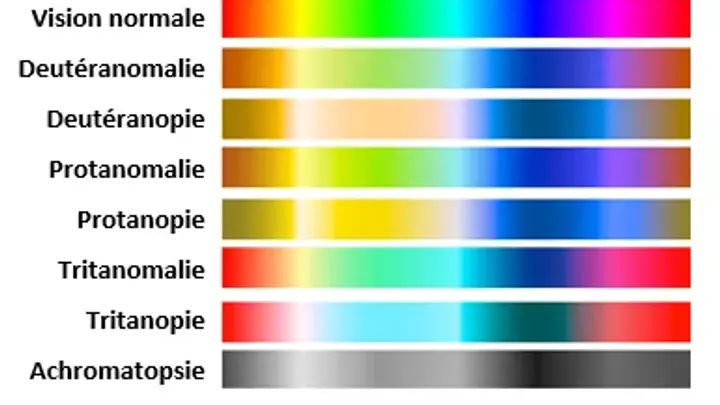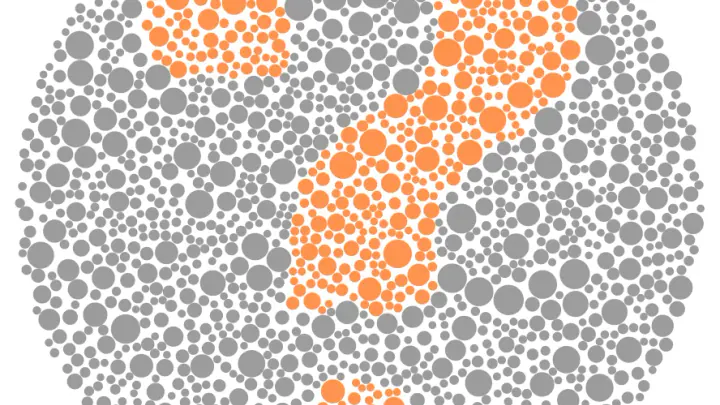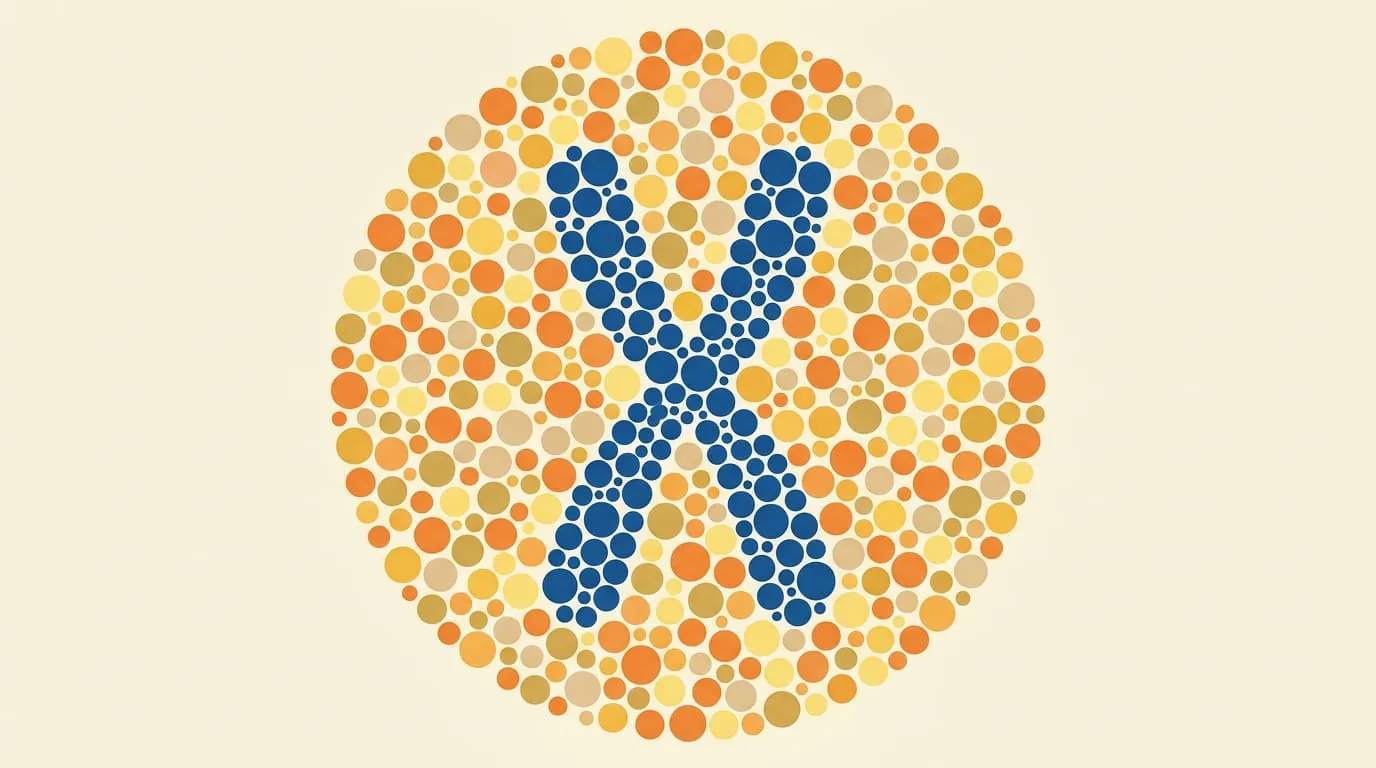
Color blindness affects about 8% of men and 0.5% of women, a figure generally established in Northern European populations and to be nuanced on a global scale (see What is color blindness?). But why such a marked difference between the sexes? And can we predict whether a child will be color blind?
Color blindness is genetic, not acquired
Unlike some color vision problems that can appear with age, diabetes or certain diseases, classic color blindness is genetic and congenital in origin. You are born color blind; you don’t become it.
This distinction matters: there are acquired color vision deficiencies (which affect color vision following an illness or a treatment), but they are different from the inherited color blindness discussed here.
The genes involved: a story of the X chromosome
The most common forms of color blindness, the red-green deficiencies, are linked to the genes coding for the pigments of the red and green cones. These genes are found on the X sex chromosome.
That is why the split between men and women is so lopsided.
In women (two X chromosomes):
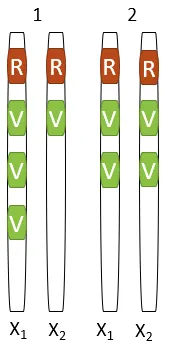
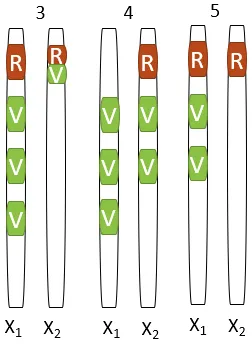
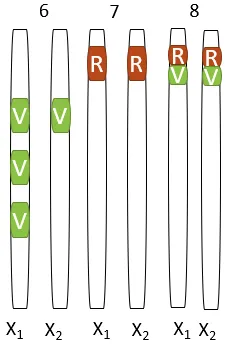
To be color blind (article in French), they must have the faulty gene on both chromosomes. With a single healthy X chromosome, color vision is typical, but they are carriers and can pass the gene on. In some cases, a carrier even develops a fourth type of cone (article in French) rather than a deficit.
In men (a single X chromosome):
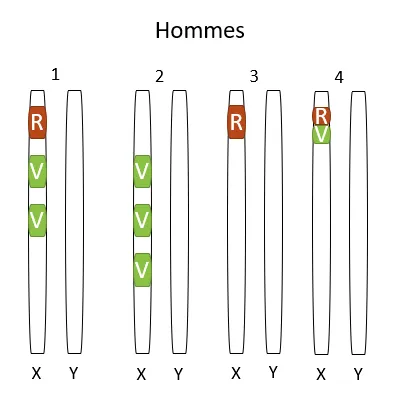
A single faulty gene is enough to cause color blindness, because the Y chromosome doesn’t carry a compensating gene.
This mechanism explains why men are about 16 times more often color blind than women.
The exception: blue-yellow color blindness
The gene coding for the blue cones (OPN1SW) is located on chromosome pair 7, not on the sex chromosomes. Tritanopia (article in French; absence of blue cones) and tritanomaly (partial malfunction) therefore affect men and women equally. These forms remain very rare, in the order of one person in 10,000 to 30,000 depending on the studies.
Their transmission also follows another rule, called autosomal dominant: a single altered copy of the gene is enough, whether it comes from the father or the mother. With a nuance: this gene isn’t expressed in everyone who inherits it (this is called incomplete penetrance), and the severity varies a lot within the same family.
Hereditary transmission
The transmission pattern depends on the type of color blindness and on the parents’ situation. For red-green color blindness (the most common):
Color blind father, non-carrier mother:
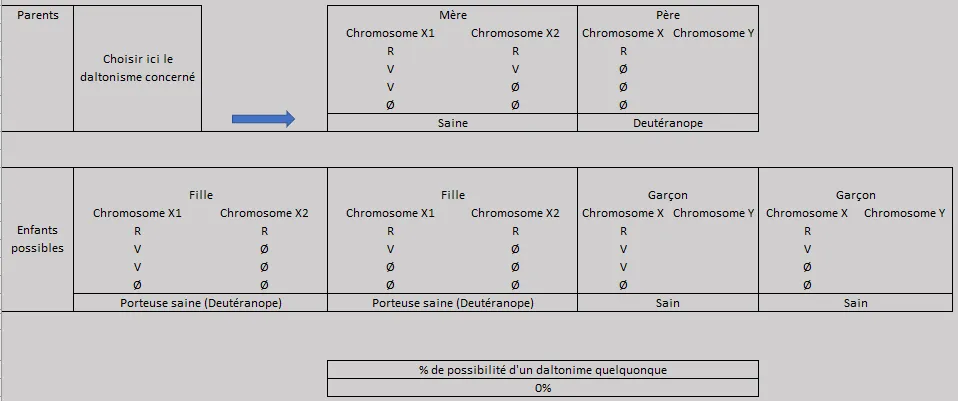
→ No color blind children, but all the daughters are unaffected carriers
Unaffected father, carrier mother:
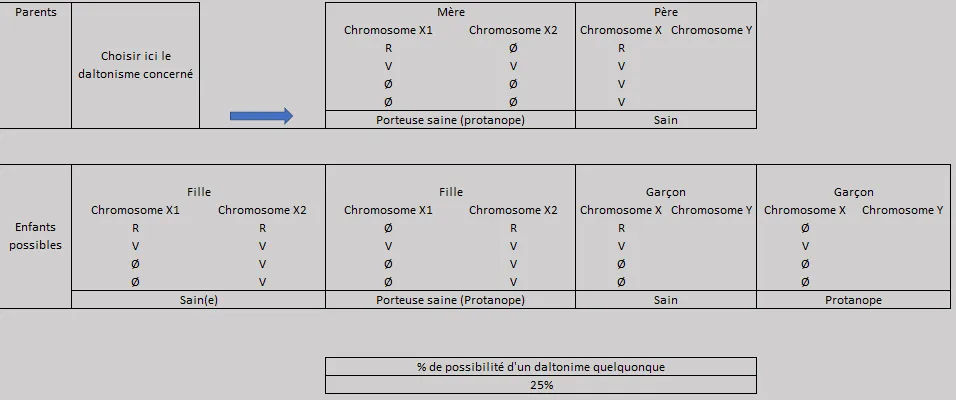
→ 50% of sons color blind, 50% of daughters carriers
Color blind father, mother carrying the same type:
→ 50% of sons color blind and 50% unaffected; 50% of daughters color blind and 50% carriers
Deuteranope father, protanope mother:
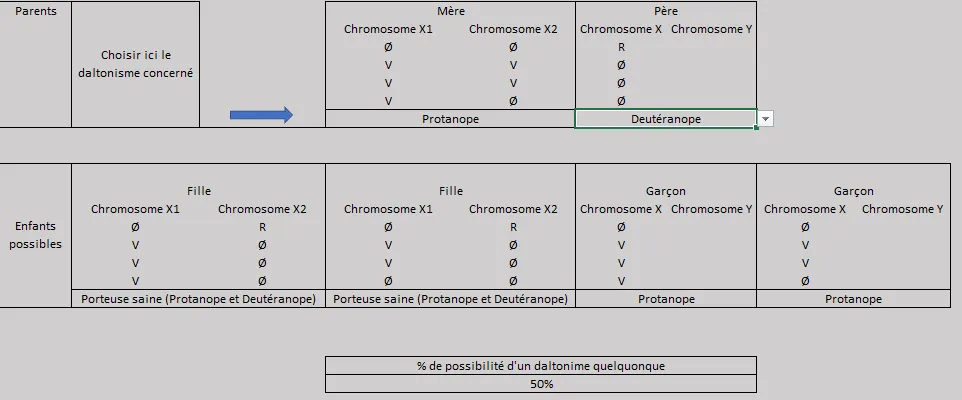
→ All the sons are protanopes, like their mother. No daughter is color blind: each receives a protan X from her mother and a deutan X from her father, and each chromosome supplies the pigment the other one lacks. They are, however, carriers of both types.
For blue-yellow color blindness, the rule doesn’t depend on sex: a tritan parent passes the gene on to each child with a one in two chance.
Calculating the probability for a child
These diagrams cover the most frequent cases. The calculator below combines all the situations, including a mother whose carrier status is unknown and blue-yellow color blindness. It gives a probability, not a prediction.
The calculator needs JavaScript to work.
Can you be color blind without knowing it?
Absolutely. Red-green color blindness, especially in the form of a partial anomaly (deuteranomaly or protanomaly), can go unnoticed for many years. People with it often compensate unconsciously, relying on other cues (brightness, contrast, context) to tell colors apart.
It is often only at school, during a medical test or in a specific situation, such as reading a color-coded map or sorting electrical cables, that it is discovered. An online test gives a first indication in a few minutes.