
Color is not universal.
I'm a protanope: to the right of the slider, this is more or less how I see these pencils. Here, I explain color blindness simply, without dramatizing it or reducing it to a flaw.
8% of men of Northern European origin4.4% of boys and 0.6% of girls worldwideSources

Understand, don't fix
Three articles to read in order if you're new to the subject.
- 1Understand
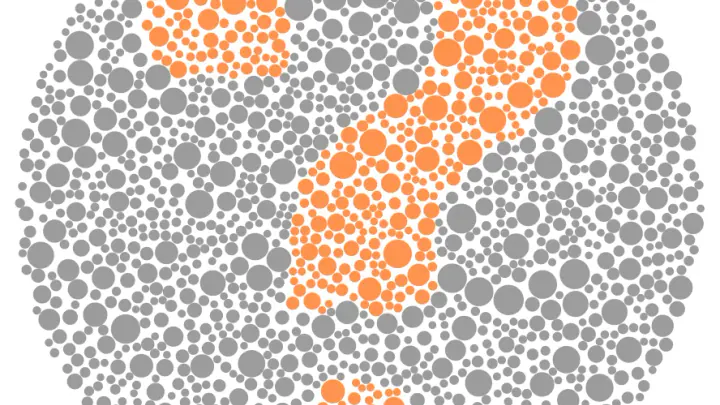
What is color blindness?
Color blindness, or color vision deficiency, is a difference in how colors are perceived. It is not blindness, just a different way of seeing.
- 2Distinguish
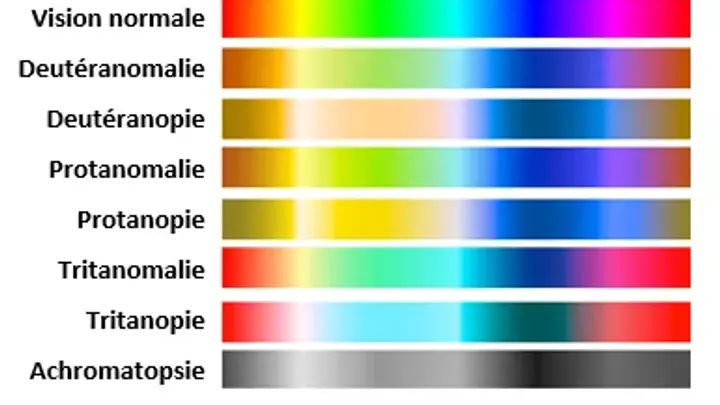
The types of color blindness
There isn't one color blindness, but seven main types, and dozens of possible combinations. A complete overview.
- 3Test yourself
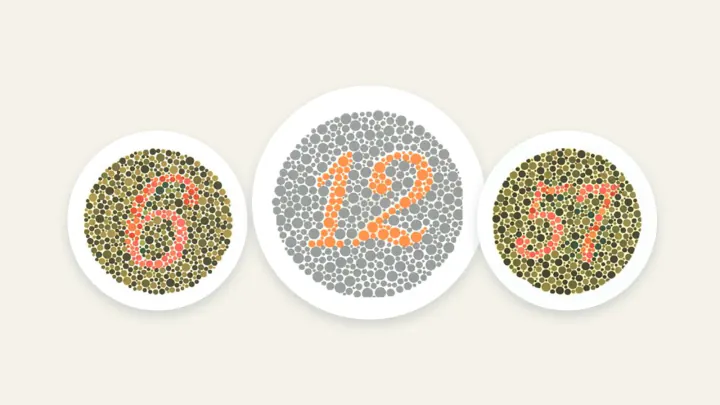
The Ishihara test
The most widely used test to detect red-green color blindness. How it works, its limits, and how to take it in good conditions.
See, test, understand
The Chameleon test
All kinds of color blindness: red-green and blue-yellowA chameleon is hiding in a stained glass window: tap it as soon as you see it. Nothing to read, nothing to type.
Take the Chameleon testThe Ishihara test
Red-green color blindness onlyThe plates of colored dots used by eye doctors, since 1917. Twelve plates, a number or a path to recognize.
Go through the plates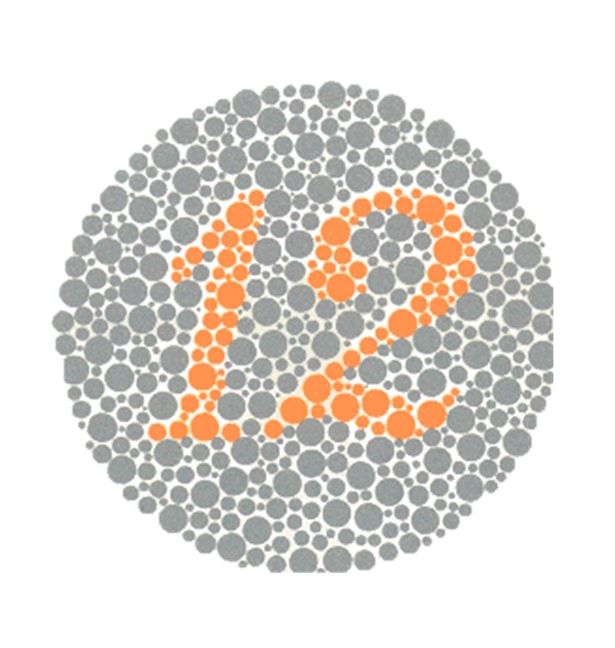
The simulator
Your photos or your camera, seen through the main types of color blindness. Nothing is sent anywhere: it all happens in your browser.
Open the simulatorThe inheritance calculator
The probability of passing on protan, deutan or tritan color blindness, depending on both parents.
CalculateLatest articles

Treating color blindness?
Color blindness is genetic, but its effects can be eased. Filtering glasses, apps and gene therapy: where things stand.
Read the article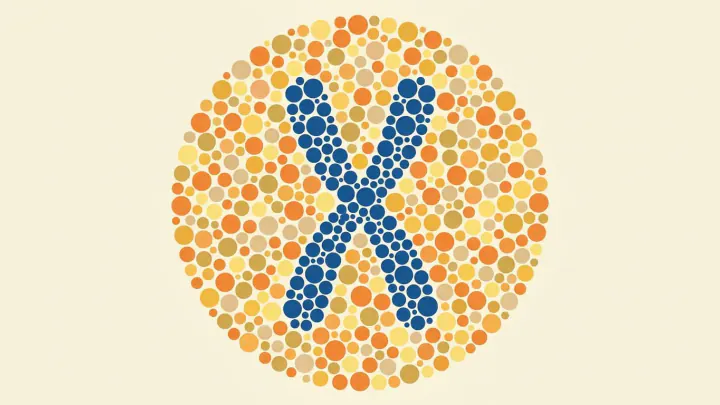
Why are people color blind?
Color blindness is genetic, not acquired. How it is passed on, why it mostly affects men, and a probability calculator for a child, tritan included.
Read the article
How color vision works
Understand how the eye perceives color thanks to the retinal cones, and why some people see colors differently.
Read the article