Before understanding color blindness, you first need to understand how typical color vision works. This mechanism, both physical and neurological, is more complex than it seems.
What is visible light?
Light is an electromagnetic wave. Like the ripples that form when you throw a pebble into water, a wave is the propagation of a disturbance through a field.

The human eye perceives only a tiny part of the electromagnetic spectrum: wavelengths between roughly 400 and 700 nanometers.
Below 400 nm, we enter the ultraviolet, invisible to us but perceptible to some insects. Beyond 700 nm, it’s infrared. Our window onto the colored world is therefore narrow, but enough to tell apart millions of shades.
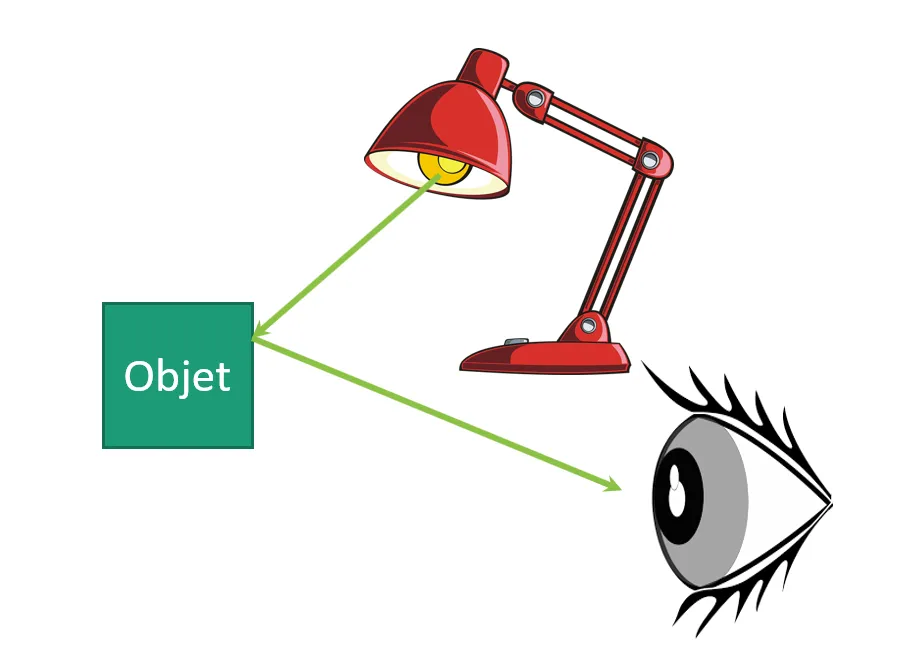
When light hits an object, part of it is absorbed and part is reflected. It is this reflected light that our eye picks up:
The role of the retinal cones
At the back of the eye, the retina contains two types of photoreceptors: rods (night vision, in shades of gray) and cones (daytime vision, in color).
There are three types of cones, each sensitive to a range of wavelengths:
- S cones (“blue”): sensitive to short wavelengths, around 420 nm
- M cones (“green”): maximum sensitivity around 530 nm
- L cones (“red”): the only ones to perceive long wavelengths, around 560 nm
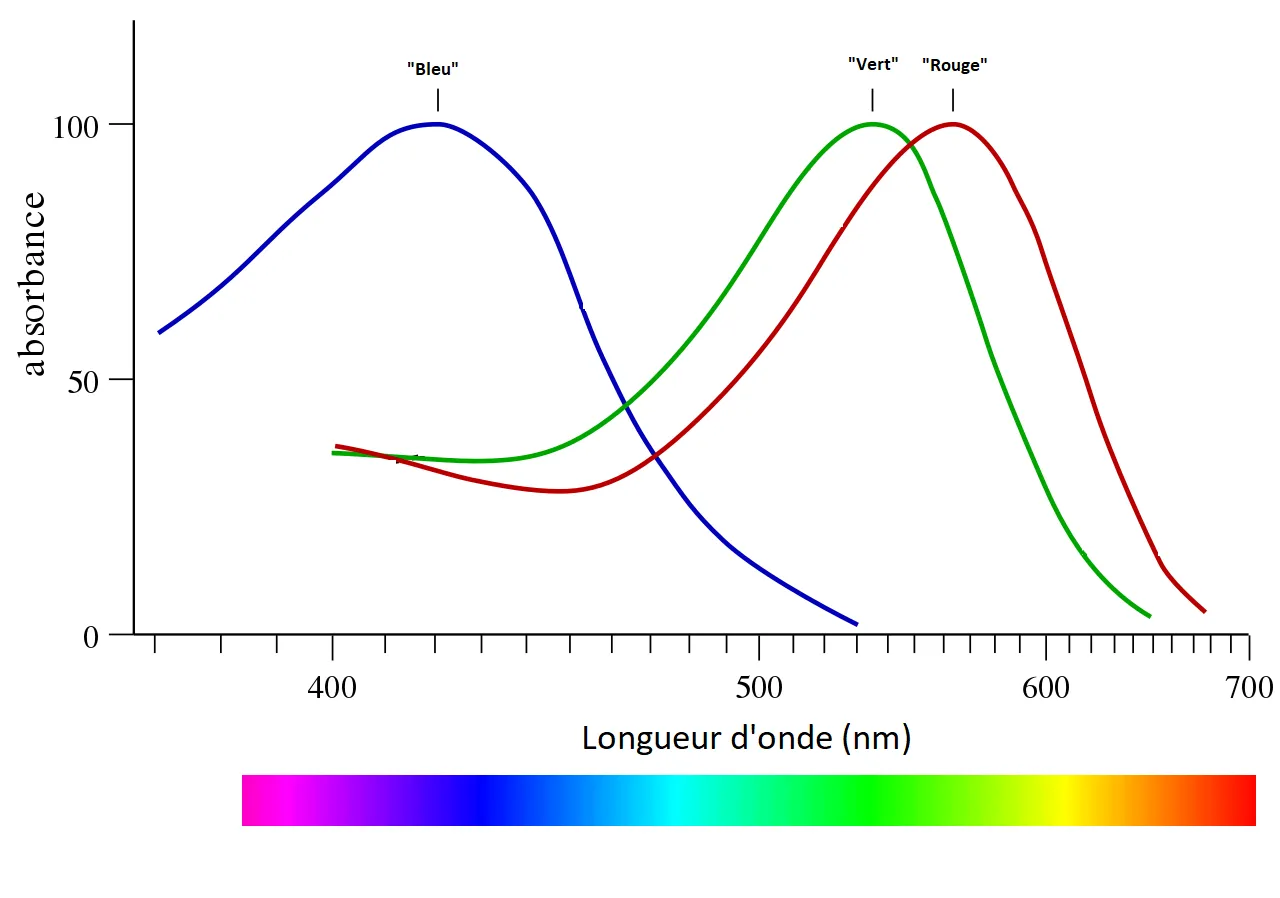
The brain receives the signals from the three types of cones simultaneously and combines them to produce the sensation of color.
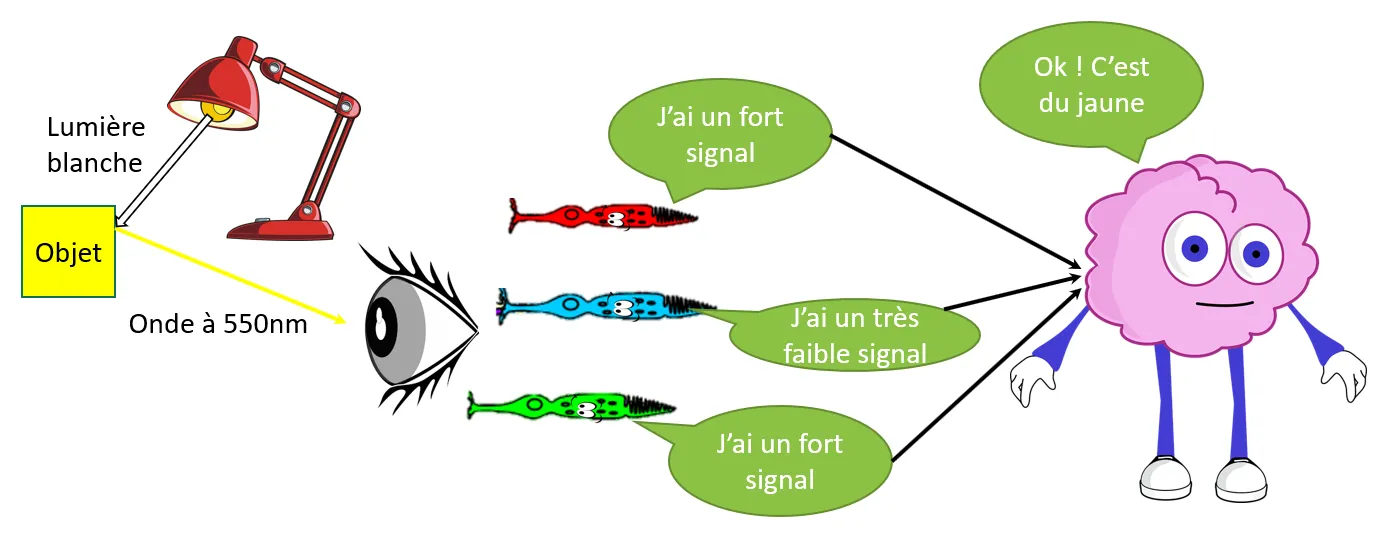
This neurological mixing is what allows us to tell apart, depending on the estimates, from a few hundred thousand to several million different shades¹.
How color blindness is explained
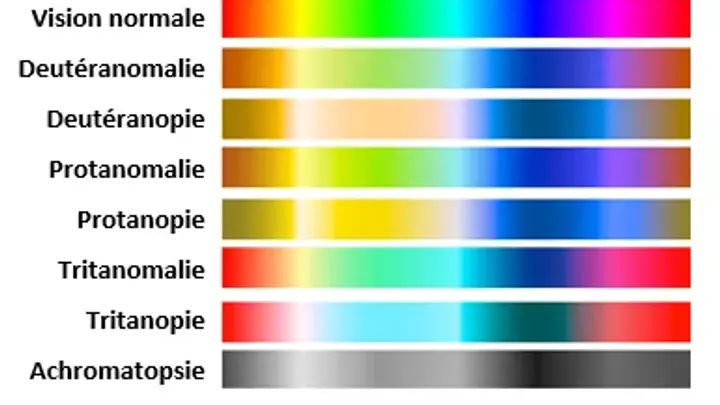
In a color blind person, one or more types of cones don’t work properly, or are absent. The brain then receives an incomplete or biased signal, which prevents it from telling certain wavelengths apart.
Several situations can be distinguished:
- Typical trichromatic vision: the three types of cones work perfectly
- Anomalous trichromacy: the cones are present but their spectral sensitivity is shifted (deuteranomaly, protanomaly, tritanomaly)
- Dichromacy: one type of cone is absent (deuteranopia, protanopia, tritanopia)
- Achromatopsia: total absence of working cones, vision only in shades of gray
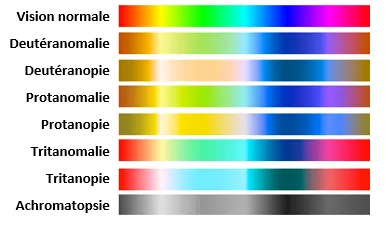
The detail of each type, its prevalence and its precise mechanism, is the subject of a dedicated article. To find out where you stand, our online test gives a first indication.
Do we all see the same white?
Yes. Even color blind people perceive white the same way as people with typical vision. White corresponds to the simultaneous and balanced stimulation of the three types of cones; since everyone keeps some sensitivity to long wavelengths, the perception of white stays consistent.
On the other hand, some people are tetrachromats: they have four types of cones instead of three. These individuals might perceive differences invisible to the rest of the population, in particular in certain light compositions that look white to us.
And black?
Black objects absorb practically all visible wavelengths. No cone is stimulated differentially, and the sensation is identical for everyone: an absence of color.
Color vision in the animal kingdom
Humans are not the best off when it comes to color perception:
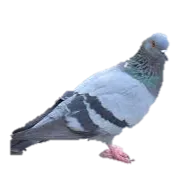


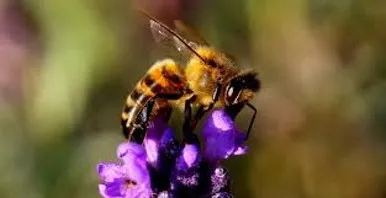
The bee is a good illustration that having the same number of cones as we do doesn’t mean seeing the same world: it is a trichromat like a human with typical vision, but its set of cones is shifted toward short wavelengths (ultraviolet, blue and green³), where ours covers blue, green and red. The result: a bee doesn’t see red at all, but perceives ultraviolet, invisible to us, which reveals hidden patterns on flowers.
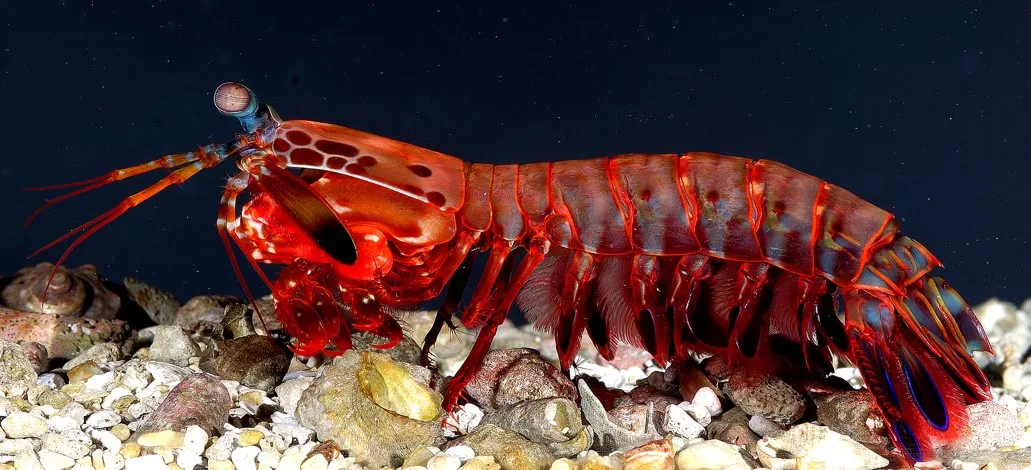
That said, having more cones doesn’t necessarily mean “seeing more colors”: brain processing plays an equally decisive role. This is the case for the mantis shrimp, whose fine color discrimination remains, despite its record number of photoreceptors, worse than ours².
Scientific sources
¹ Estimates of the number of colors the human eye can tell apart vary strongly depending on the method (from a few hundred thousand in real use to several million as a theoretical capacity); no single value is agreed upon in the literature.
² Thoen HH, How MJ, Chiou TH, Marshall J. A Different Form of Color Vision in Mantis Shrimp. Science, 2014;343(6169):411-413. doi:10.1126/science.1245824, on the atypical color vision mechanism of the mantis shrimp, despite its record number of photoreceptors.
³ Skorupski P, Chittka L. Photoreceptor Spectral Sensitivity in the Bumblebee, Bombus impatiens. PLoS ONE, 2010;5(8):e12049. Sensitivity peaks of the three photoreceptors around 347 nm (UV), 424 nm (blue) and 539 nm (green) in the bumblebee, a profile comparable to that of the honeybee.